
The Truth About Moissanite Diamonds: Sparkle, Science, and a Bit of Soul
July 27, 2025I’ll be honest — until a few years ago, I thought all diamonds were dug from deep beneath the earth, carried out of dusty mines by people in hard hats. You know, the old-school idea of what “real” luxury looks like. Then a friend showed me her engagement ring — a blindingly bright stone that shimmered like liquid light.
“It’s moissanite,” she said, almost proudly. “Not a diamond. But close enough — maybe even better.”
That was the start of a rabbit hole I didn’t expect to fall down. What exactly is moissanite? Why are so many Australians — especially younger couples — ditching mined diamonds for lab-grown and moissanite stones? And, perhaps the trickiest question of all: can something not born in the earth still carry the same emotional weight?
Let’s unpack it.
The Origin Story: A Cosmic Beginning
The tale of moissanite actually starts not on Earth, but in the stars. In 1893, a French chemist named Henri Moissan discovered tiny crystals inside a meteorite crater in Arizona. He thought they were diamonds at first — fair mistake, given how they sparkled — but later realised they were composed of silicon carbide, an entirely different mineral.
Fast forward to today, and moissanite is no longer scraped from meteorites (thankfully). It’s created in laboratories under highly controlled conditions, which means it’s not only ethically sourced but also remarkably consistent in clarity and brilliance.
There’s something quite poetic about that, isn’t there? A gem that started its story among the stars now sitting on someone’s finger in Melbourne or Sydney — it’s a bit romantic, in a futuristic kind of way.
Moissanite vs Diamond: The Look and Feel
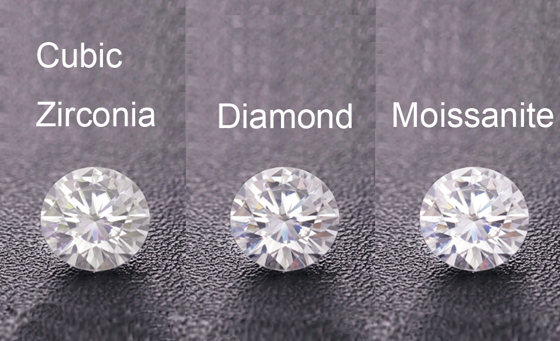
Now, let’s be clear: moissanite isn’t identical to diamond, even if it’s often marketed as a “diamond alternative.” The difference lies in the details.
Diamonds have a brilliance that’s sharp and icy — that cold fire you see in luxury jewellers’ windows. Moissanite, on the other hand, reflects light differently. It produces more of a rainbow sparkle, especially in sunlight, which some people find even more beautiful. Others, admittedly, say it looks “too sparkly,” almost like it’s trying too hard.
Personally, I think that depends on the setting and the cut. A high-quality moissanite in a simple gold band looks stunning — timeless, not flashy.
And the hardness? On the Mohs scale, diamond ranks a perfect 10. Moissanite comes in at 9.25 — pretty close, which means it’s durable enough for everyday wear. Unless you’re planning to use your ring as a hammer (please don’t), you’ll be fine.
If you’re curious about a detailed comparison of the two, there’s a great resource from Novita Diamonds that breaks down the science and aesthetics beautifully — you can check it out here.
The Shift Toward Ethical and Affordable Luxury
It’s no secret that the diamond industry has faced ethical scrutiny. Between mining conditions, environmental concerns, and opaque supply chains, many buyers have started to question what “value” really means.
That’s where moissanite and lab-grown diamonds enter the conversation — not as cheap knock-offs, but as symbols of conscious consumption.
Moissanite is entirely lab-created, requiring no mining whatsoever. That’s a big tick for sustainability. And price-wise, it’s far more accessible. We’re talking around one-tenth the cost of a natural diamond of similar size.
For many Australians — particularly millennials and Gen Z — that matters. People are choosing to invest in experiences, homes, or travel instead of dropping tens of thousands on a ring. Moissanite allows them to still have something dazzling, without the financial (or ethical) guilt.
The Rise of Lab-Grown Diamonds: The Middle Ground
If moissanite feels a little too alternative for some, lab-grown diamonds often strike the perfect balance. They’re chemically identical to mined diamonds — carbon atoms arranged in the same crystalline structure — but created in controlled environments using heat and pressure.
In other words, they’re real diamonds, just born differently.
And here’s where it gets interesting: the value perception is changing fast. What used to be dismissed as “fake” or “synthetic” is now being embraced by major jewellers and fashion icons alike. Even high-end engagement ring designers are offering lab-grown options as standard.
If you’re considering going this route, I’d recommend reading this excellent guide from How To Geeks, which explains how to find the best places to buy lab grown diamonds. It’s practical, not salesy — just the kind of advice you want before making a big purchase.
The Emotional Side: Can a Stone Still Feel “Special”?
Here’s where things get personal. For many people, a diamond ring isn’t just about the sparkle — it’s about symbolism. The permanence, the rarity, the story behind it. So it’s fair to ask: does moissanite carry the same emotional weight?
Honestly, I think it depends on how you see value.
I recently spoke to a couple in Brisbane who both work in environmental science. Their engagement rings are moissanite, and they couldn’t be happier.
“To us, it’s not about rarity,” they said. “It’s about meaning — choosing something beautiful that doesn’t harm the planet.”
That sentiment is becoming increasingly common. What used to be a status symbol is now shifting toward a values symbol. A moissanite diamond might not be rare, but it’s meaningful in a way that feels modern and genuine.
The Visual Difference (That No One Can See Anyway)
Here’s a fun reality check: unless you’re a gemologist with a loupe, you’re not going to tell the difference between a high-quality moissanite and a diamond at a glance. Even jewellers admit it’s tricky.
Moissanite scores higher on refractive index (2.65 vs diamond’s 2.42), which means it reflects more light. In real-world terms, that translates to “extra sparkle.” The colour has also come a long way — early moissanites had a faint yellow or green tint, but modern ones are virtually colourless.
The best part? Because they’re lab-created, they don’t come with the tiny inclusions or imperfections that natural diamonds often have. So if you’re someone who loves clarity, moissanite is your friend.
A Quick Reality Check on Resale Value
Alright, let’s talk about the one sticking point: resale value.
Traditional diamonds, especially natural ones, can hold a certain level of resale potential (though not nearly as much as people think). Moissanite, being more affordable and lab-created, doesn’t carry much resale value. But here’s the question — do engagement rings really get resold?
Most people don’t buy these pieces as investments. They buy them as symbols of love, milestones, or self-expression. If that’s your mindset, resale value isn’t really part of the equation.
It’s like art — you buy it because it moves you, not because you plan to flip it later.
The Aesthetic Appeal: Modern, Daring, and a Little Bit Different
There’s a certain pride in choosing something that goes against the grain. Moissanite has that energy. It’s for people who want brilliance without baggage — luxury without the label.
In fact, a lot of contemporary jewellers are leaning into that difference. They’re designing bold, sculptural settings that celebrate moissanite’s unique sparkle rather than trying to disguise it as diamond. Think asymmetrical bands, mixed metals, and gender-neutral designs. It’s a new kind of elegance — less about conformity, more about character.
The Australian Market’s Quiet Revolution
In Australia, the shift toward alternative gemstones has been fascinating to watch. Boutique jewellers in Melbourne’s Fitzroy, Sydney’s Surry Hills, and even online platforms across the country are seeing more demand for moissanite and lab-grown options.
One Sydney-based designer told me, “People want transparency — literally and metaphorically. They want to know where their gem came from, how it was made, and whether it aligns with their values.”
It’s not just about price anymore. It’s about purpose.
Final Thoughts: The Future of Forever
Maybe the most beautiful thing about moissanite isn’t just its sparkle or its story — it’s what it represents. Choice. Change. Consciousness.
We’re moving into an era where love and luxury don’t have to come at the planet’s expense. Where science meets sentiment. Where you can look at your ring and know that every bit of it — from its shine to its sourcing — reflects something you truly believe in.